
Gendered Borders
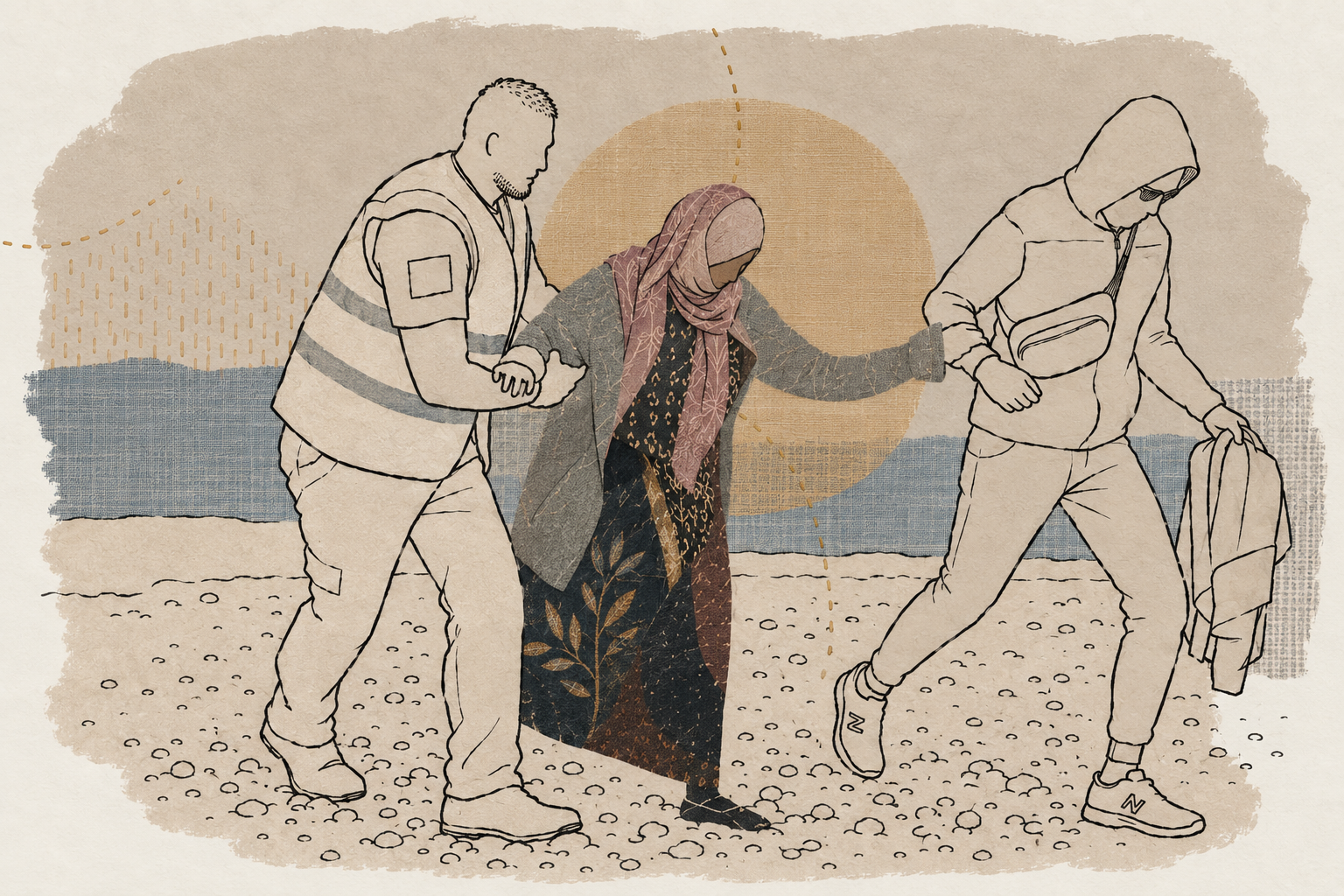
Illustration based on a photograph by Henry Nicholls/AFP, published by Guardian Nigeria, “Children, pregnant woman among latest UK small boats arrivals,” 16 August 2023.
As border controls become increasingly restrictive, asylum-seekers face more dangerous and uncertain routes to safety. While women are disproportionately affected by strict border regimes, their specific experiences and vulnerabilities are often overlooked.
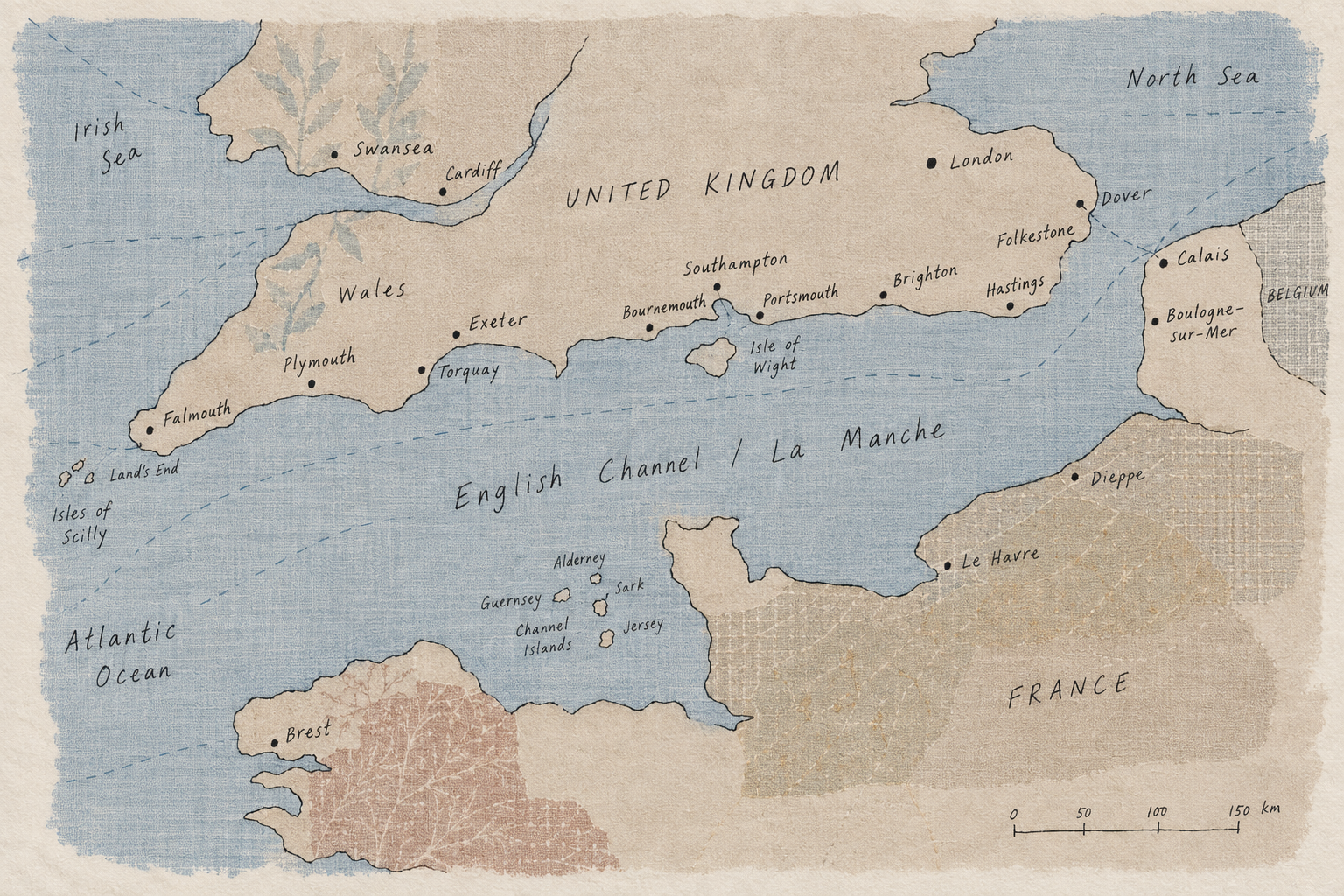
Funded by the European Union through the Marie Skłodowska-Curie Actions programme, the Gendered Borders project investigates the gendered lived experiences of migrant women crossing the English Channel by boat to seek asylum in the UK. It examines how these women navigate heightened risks, while also challenging common portrayals of them as passive victims, by highlighting their agency and resistance. The project’s goal is to reveal in-depth insights into these experiences and inform more equitable asylum policies and reforms.
More about Gendered Borders
Project objectives
As global border control policies intensify, migrants face heightened obstacles in reaching sovereign territories to claim asylum. In the UK this has been exacerbated by intensified coastal border securitisation and policies designed to deter those arriving by boat. Traditional geopolitical frameworks have largely provided macro-level, state-centric analyses, whilst neglecting the embodied, intimate and gendered dimensions of border politics.
Yet these policy developments disproportionately affect women, who are increasingly attempting these dangerous journeys alone or with children. Women face intersecting vulnerabilities, often subjected to exploitation during journeys, while also facing unique challenges during the asylum process.
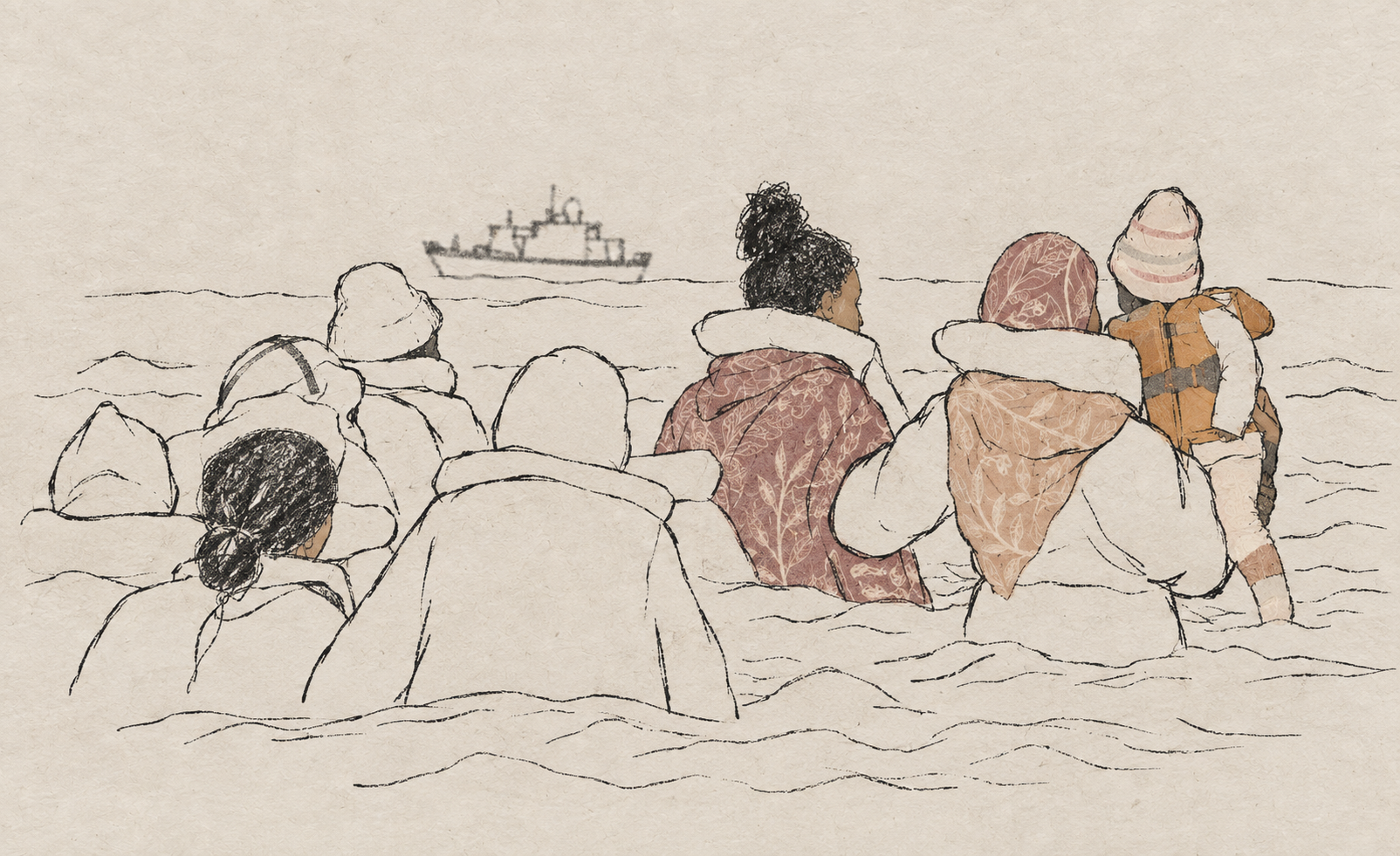
And yet, asylum-seeking women have been pivotal in challenging oppressive bordering systems through everyday acts of care, solidarity and resilience.
To date, we know little about the lived experience of channel crossings, particularly from a gendered perspective. This absence has led to policies and research that overlook the specific vulnerabilities faced by asylum-seeking women, as well as the broader geopolitical factors which continue to make boat crossings a viable option.
The research explores women’s lived experiences of crossing borders, asking how increasingly restrictive border polices are encountered and embodied in everyday life. The project uses an interdisciplinary feminist approach, bringing together in-depth qualitative research with creative, participatory methods.
Thinking through Textiles
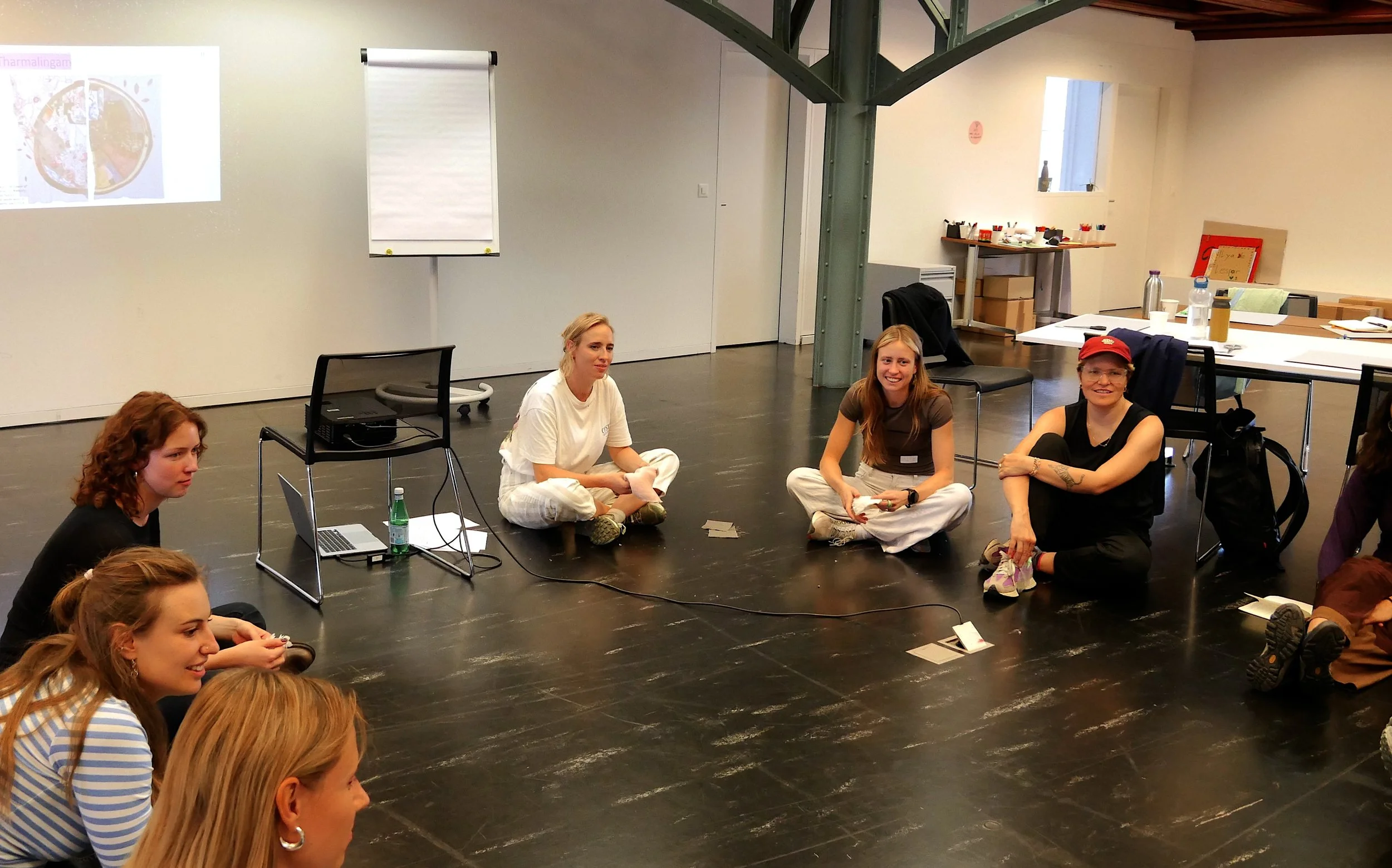
Textiles are an important part of the project’s creative and participatory approach. Through collective workshops, women are invited to explore their experiences of border crossing through making, using practices such as patchwork, weaving, knitting and cross-stitch as forms of storytelling. These activities offer ways of expressing embodied experiences that may not always be easy to put into words, while creating space for conversation, reflection and community building.
The project draws on the long history of textiles within feminist and community practices, including their use as forms of solidarity, protest and quiet activism. Rather than treating participants simply as subjects of research, the creative process is intended to support women in shaping and sharing their own stories, on their own terms. The created works will become part of a public exhibition during Refugee Week UK, co-created with the women involved.
About
This research is conducted by Amanda Schmid-Scott, a Postdoctoral Research Fellow based at the Institute of Geography, University of Bern. Her current project, Gendered Borders, focuses on women’s experiences of borders, exploring how border policies and practices are encountered and navigated in everyday life. The project is funded by the European Union, through a Marie Skłodowska-Curie Postdoctoral Fellowship.
Amanda is a feminist geographer and creative researcher with a background working in research and the creative arts. She has over 15 years of experience volunteering and conducting research with asylum-seeking and migrant communities across the UK, Lebanon, and the Ethiopia-Somalia border. She uses creative and participatory approaches to explore borders and migration, with a particular interest in the ways that borders are experienced through everyday encounters.
Her work is informed by feminist approaches to geography and border studies, which challenge more abstract ways of understanding borders. Feminist approaches draw attention to how experiences of borders are shaped by intersecting relations of gender, race, place and power, and to the ways in which wider systems of border control are felt and negotiated in ordinary, intimate moments.
Before her fellowship, Amanda was a Visiting Lecturer in Social and Cultural Geography at the University of Bern. She has also worked as a Lecturer and Research Associate in the School for Policy Studies at the University of Bristol, and as an ESRC Postdoctoral Research Fellow in Geography at the University of Newcastle. She completed her PhD in Human Geography at the University of Exeter, her MA in Anthropology at Goldsmiths, University of London, and her Bachelors in Art at the University of Creative Arts. Before working in academia, she worked across the arts and media, including in documentary film and communications.